Date: January 27, 2026
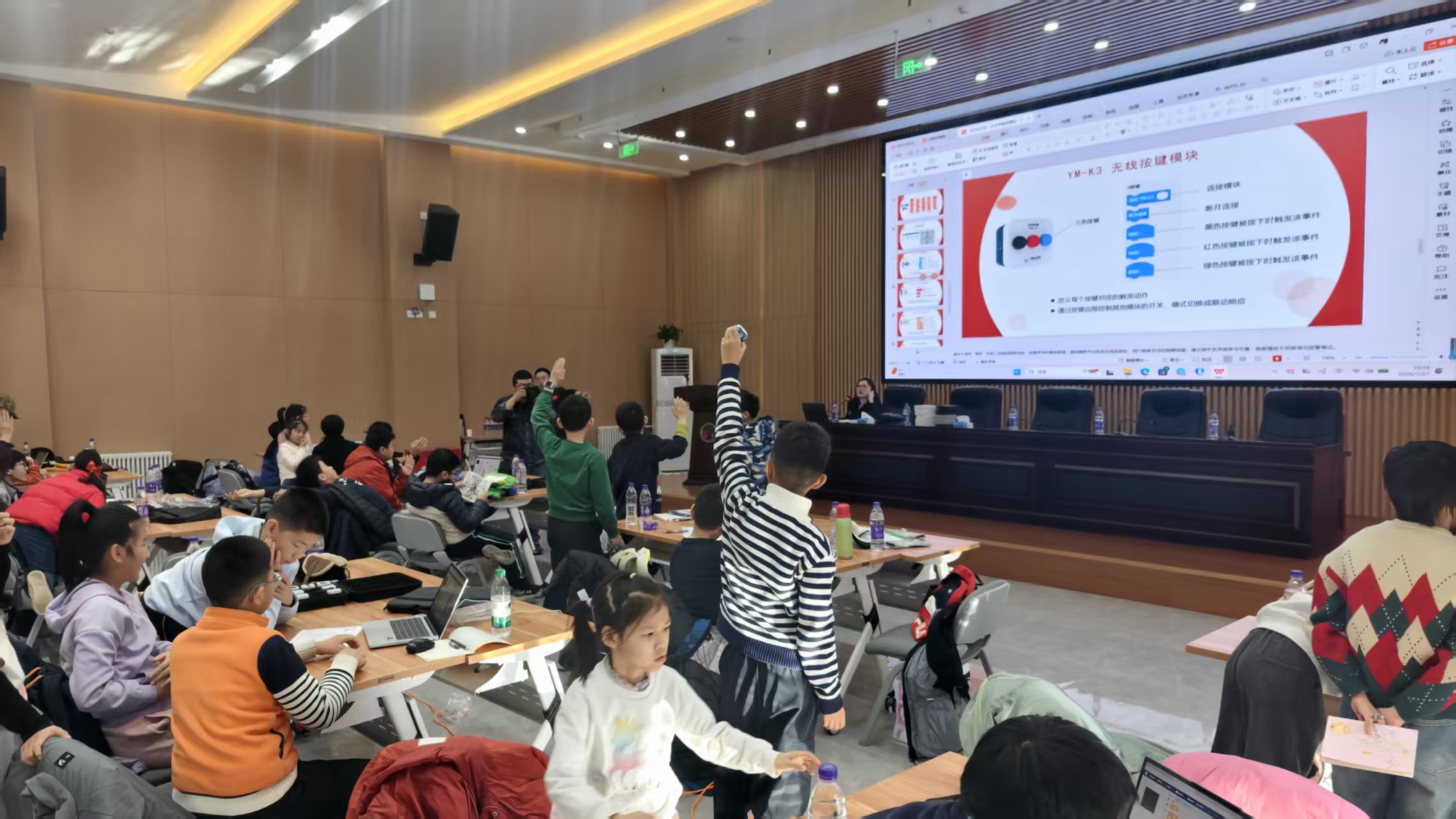
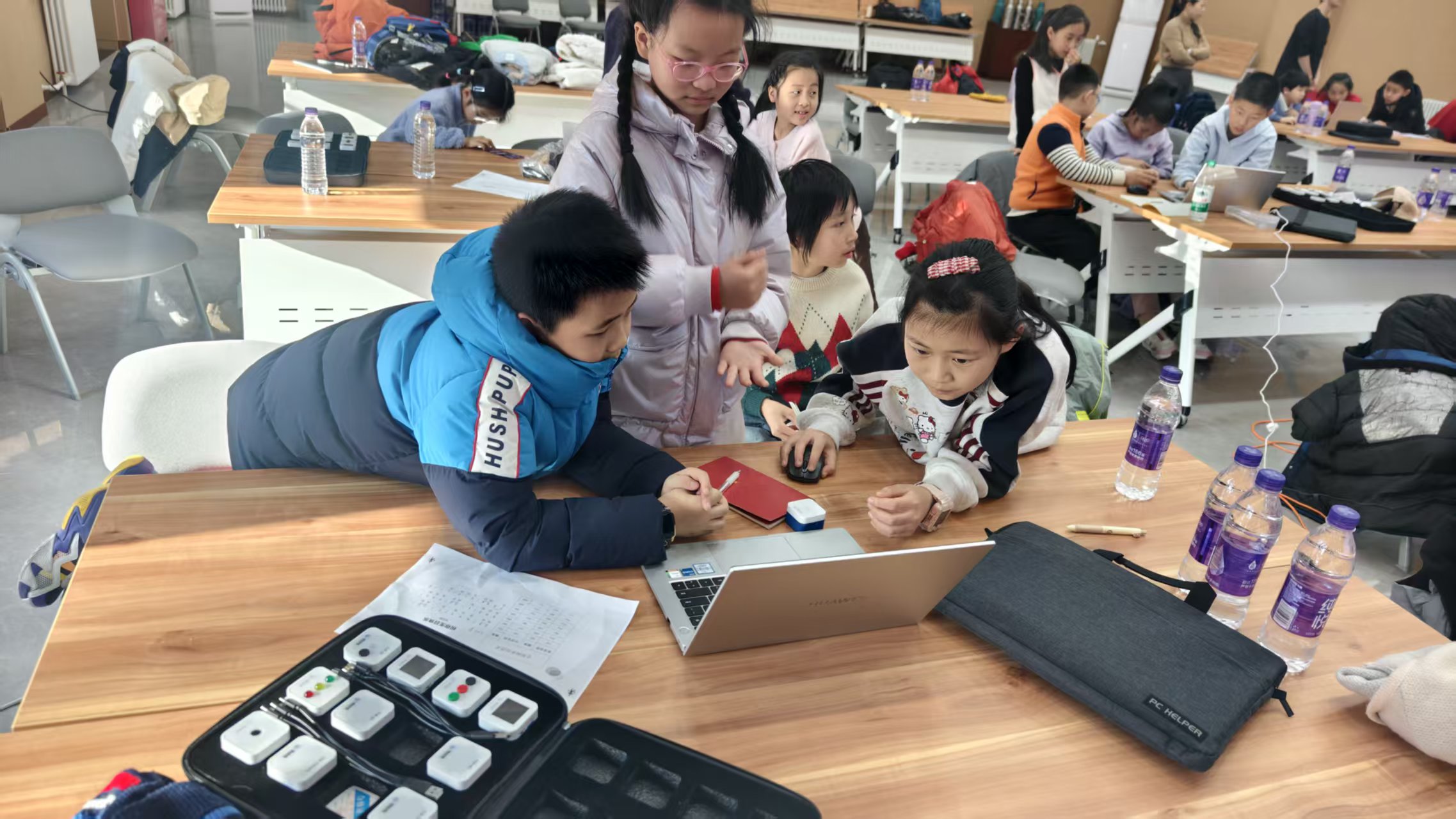
Beijing YiLink Technology supported an elementary-school winter camp organized by Tianjian Center of Beijing Science and Industry Group. Using YiLink Cube and the yiBlock programming platform, the course introduced a simulated “Beidou astronaut search-and-rescue” challenge. Students used visual programming to connect positioning, communication, and audio-visual feedback modules, exploring how program logic can control physical devices through teamwork.
The lesson centered on a simulated rescue mission. Students worked with YiLink Cube modules to build a coordinate transmitter and a rescue device. The transmitter combined a controller, buttons, 4G communications, a Beidou positioning module, and an audio module. The rescue device used a controller, buzzer, wireless red/yellow/green indicators, a motion sensor, 4G communications, and a Beidou positioning module. These devices formed an educational simulation, not a real astronaut rescue operation.
In yiBlock, students used visual blocks to write programs for reading and sharing coordinates and to configure proximity alerts and confirmation logic. The rescue device could trigger different indicator lights and buzzer alerts as the simulated distance changed, while the motion sensor helped confirm a target. The combined software and hardware made positioning, conditional logic, wireless communication, and sensing tangible through the challenge.
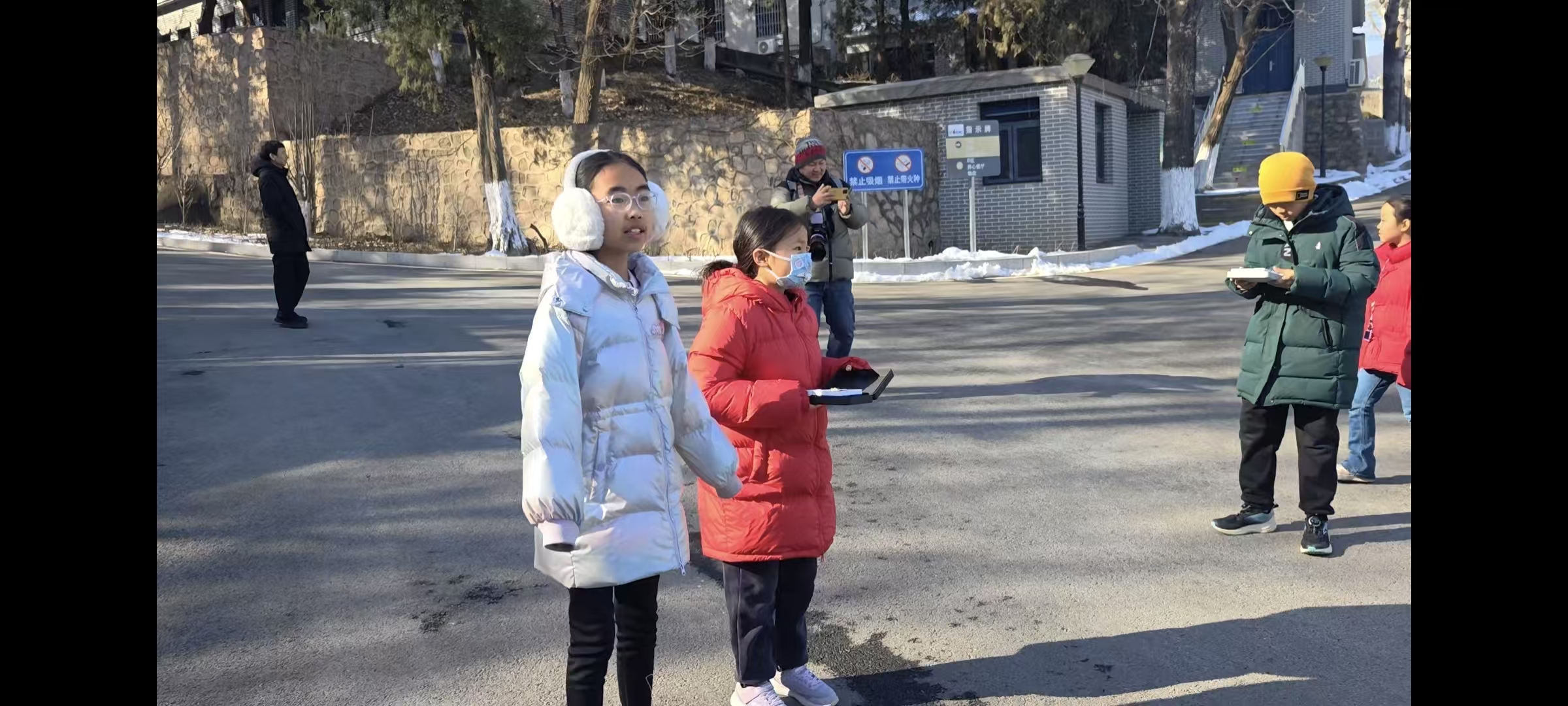
Students worked in teams with roles such as the person to be rescued, rescuers, and judges. Teams exchanged coordinate transmitters, and rescuers searched using the coordinate information. Judges recorded task completion and elapsed time. The activity connected programming practice with collaboration, communication, and on-site decision-making, giving students a hands-on way to explore how programs make devices perform a sequence of actions.
YiLink provided hardware, software, and course-practice support for the winter camp through YiLink Cube and yiBlock. YiLink will continue exploring ways to bring IoT, sensors, and programming into project-based learning, helping young learners build computational thinking and engineering curiosity through observable, hands-on feedback.